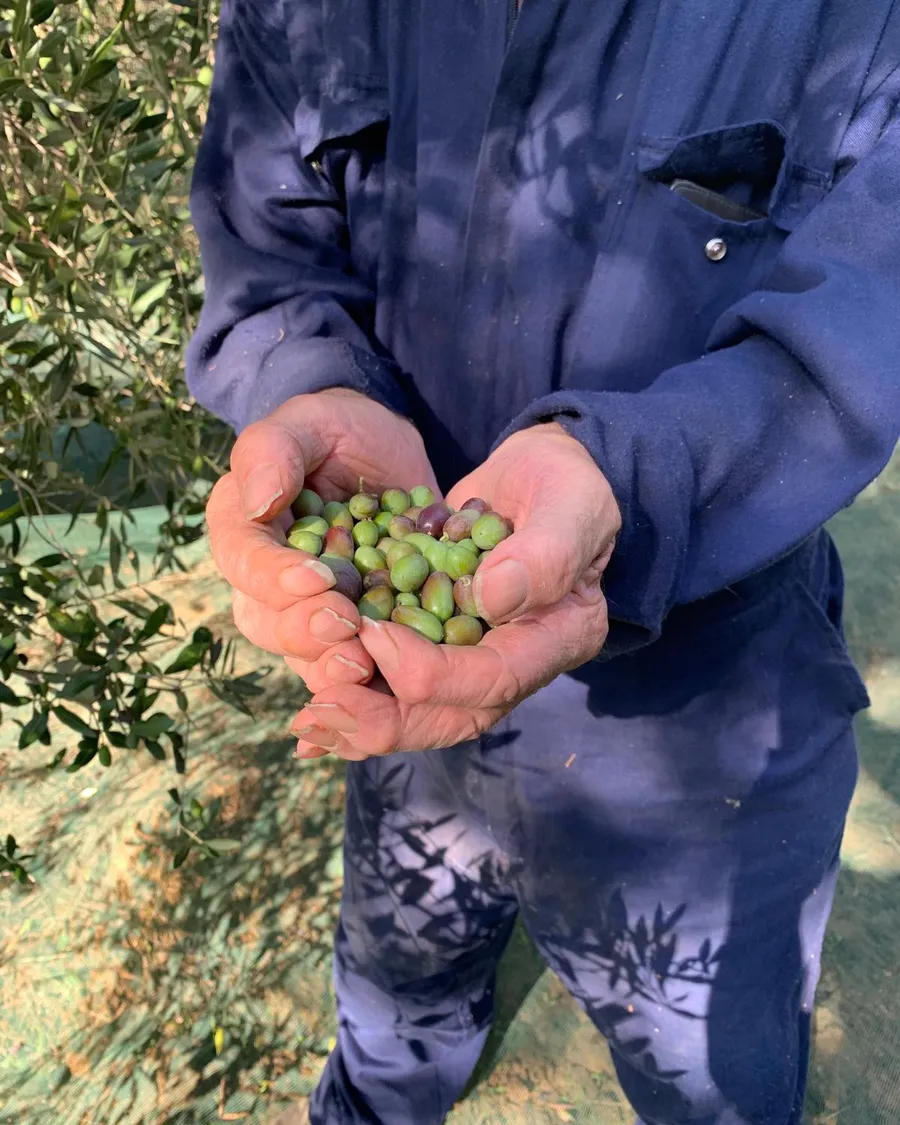
How the oil is made.
From the grove to the bottle in twelve hours. Four steps, the same ones since Natale's day.
The grove
Four thousand olive trees between the Val d'Orcia and the Crete Senesi, at 400-450 metres: Frantoio, Moraiolo and Leccino. No chemical fertiliser, green manure instead; light pruning, in rotation. A new tree starts giving olives after six years.
The harvest
By hand, into crates, from late September. The olives are small and still green: the yield is low, 7 to 9.5 per cent, and the oil's acidity is close to zero.
The mill
The olives are pressed eight to twelve hours after picking, cold, below 27 °C, at Frantoio Buraschi in Montepulciano. That is what keeps the oil extra virgin: green, dense, with the scent of freshly cut grass.
The bottle
Dark glass that shields it from light, in three sizes, or the tin for everyday cooking. Each harvest is what the trees give: when it's gone, we wait for the next one.
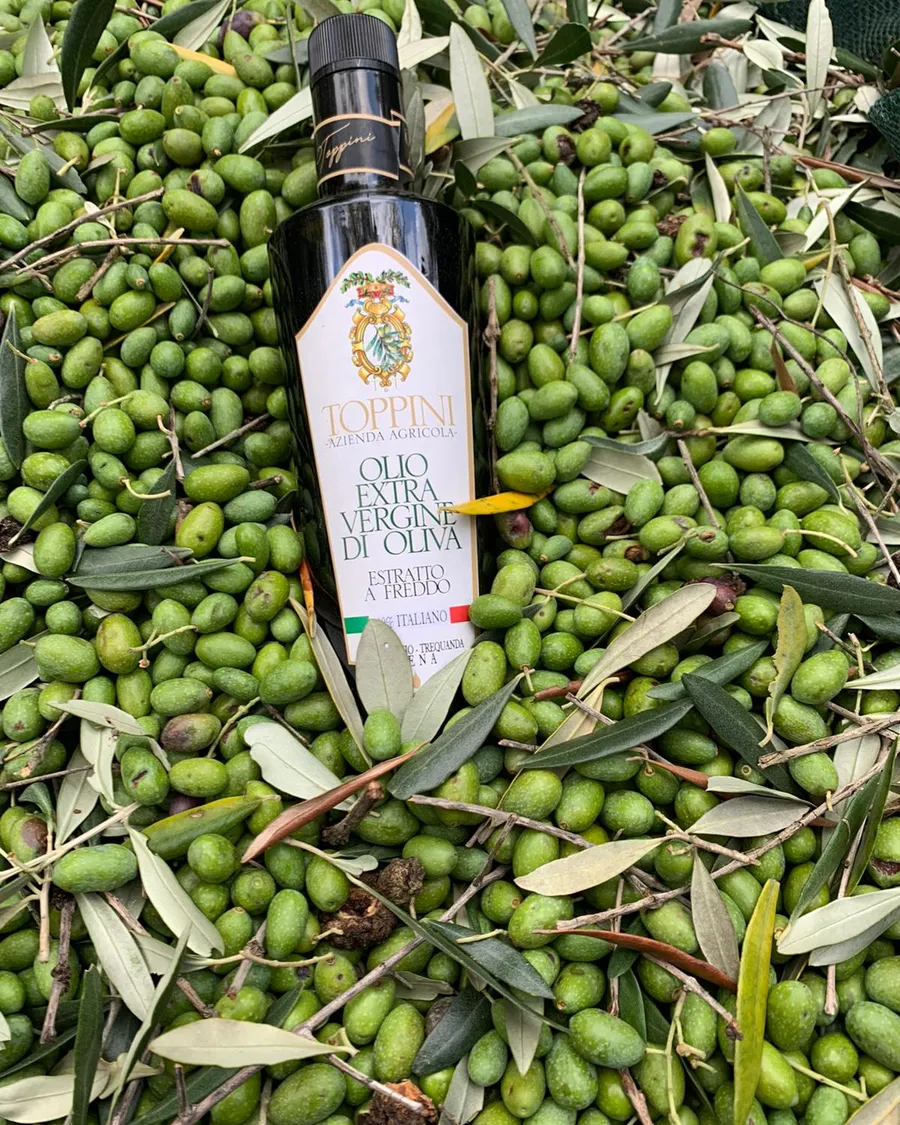
Cold, below 27 °C.
Temperature is the whole point. Above 27 °C you get more oil, but you lose aromas and polyphenols. We stay below, and accept getting less.
Eight to twelve hours pass between picking and pressing: the olives have no time to warm up or ferment. That is why the acidity stays close to zero.
The oil and the sizes